Software
tools, code, applications for music, sound, and the web
06.12.2023
catart-mubu on Max Package Manager
First release of catart-mubu, the new version of CataRT based on the MuBu framework, on Max’s Package Manager.
Talk and Music–Mind–Movement concert with Grace Leslie, France-Atlanta Festival, Georgia Tech, USA
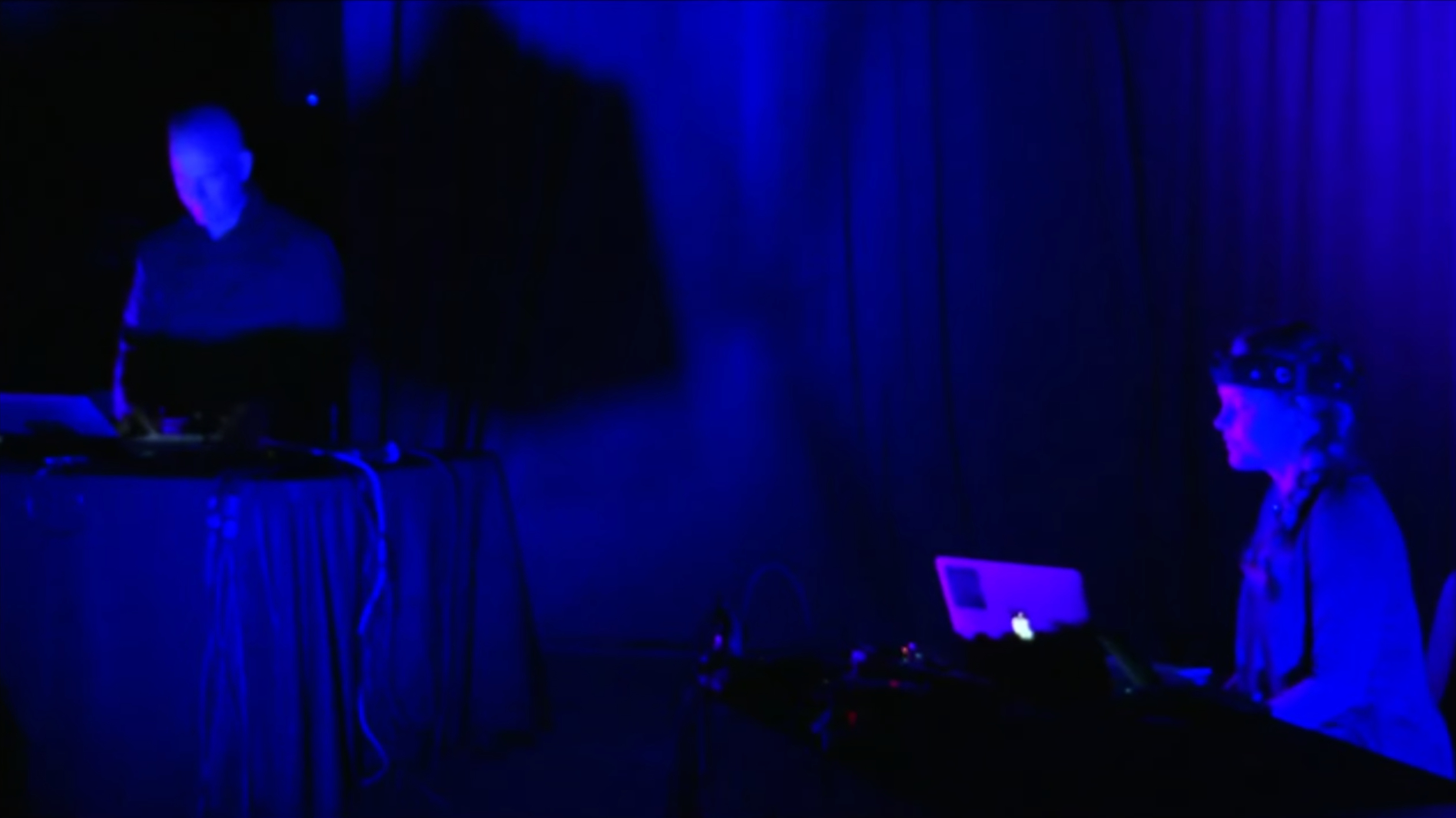 In collaboration with the Cultural Services of the French Embassy in the United States, the Georgia Tech School of Music is establishing strong links in research and education with France’s IRCAM Institute.
IRCAM researcher and musician Diemo Schwarz will perform a concert with electronic musician and Georgia Tech researcher Grace Leslie. During this performance, brain waves will steer the musical voyage through a landscape of sounds and tangible embodied interaction will articulate and reshape the musical material.
01.04.2019
First release of catart-mubu
First release of catart-mubu, the new version of CataRT based on the MuBu framework for Max.
19.07.2018
Workshop and duo concert with Alexis Baskind, Ferienkurse für Neue Musik, Darmstadt
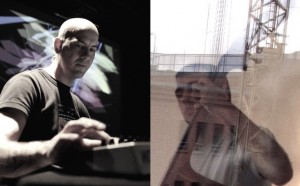 17–21.7.2018: 5-day CataRT workshop by Diemo Schwarz, Mikhail Malt featuring Alexis Baskind, Aaron Einbond, Christopher Trapani.
19.7.2018: improvisation concert by Diemo Schwarz (elec), Alexis Baskind (cb)
49th Darmstadt Summer Course for New Music
09.09.2017
DIRTI installation, Abbaye de Royeaumont
 |
 |
Images (C) Hervé Veronèse
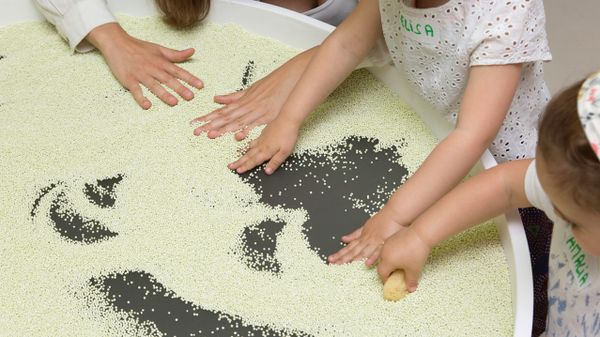
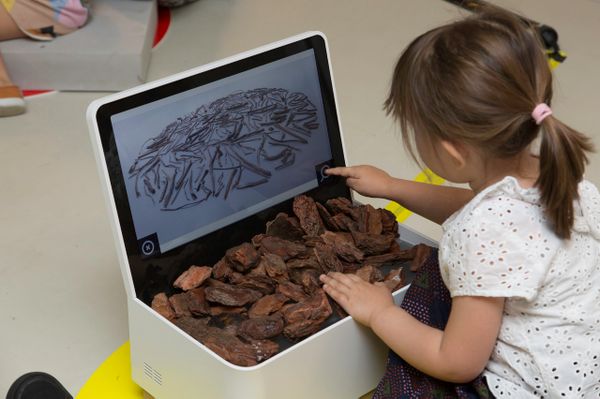
Dirty Tangible Interfaces (DIRTI) offer a playful, interactive, sonorous and visual journey for people ages two and up. Through manipulations and listening, sight and hearing is solicited. When children sink their hands in different materials that fill interactive tubs they set off sounds and images.
Saturday 9 Sep 14–17
Sunday 10 Sep 16h30
DIRTI is designed by User Studio/Matthieu Savary with audio and interaction development by Diemo Schwarz and Norbert Schnell, ISMM team, Ircam-STMS. Composition by Ariadna Alsina and Emmanuelle Lizère.
Videos: presentation , making-of.
01.06.2017
Le son au bout des doigts installation, Centre Pompidou
 |
|
Images (C) Hervé Veronèse |
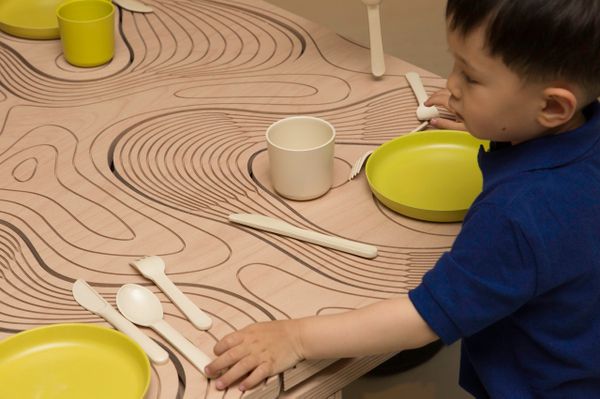
Le son au bout des doigts is an installation shown 1.6.–18.6. at the Centre Pompidou and part of Ircam’s Manifeste festival.
It offers a playful, interactive, sonorous and visual journey for children ages two and up. Through manipulations and listening, the children’s sight and hearing is solicited. In Topo-phonie Café imagined by B. MacFarlane, the children are guided by a game of organic structures. They set special tables that create sonorous suprises.
With DIRTI developed by User Studio/Matthieu Savary, when children sink their hands in different materials that fill interactive tubs they set off sounds and images.
For Topo-Phonie café I developed a new interaction method with a table, based on gesture recognition technology by the ISMM team and contact interaction.
For the Dirty Tangible Interfaces (DIRTI), I ported the sound engine to a Linux SBC and adapted the Mac software for the quadrophonic DIRTI XL.
See this article on France Musique for an appreciation.
23.11.2014
CataRT Presentation–Concert at Music Tech Fest, Ircam, Paris
 At the bustiling three-day Music Tech Fest in Paris, 21.–23.11.2014, there will be a CataRT showcase-cum-concert at 18:00, where Diemo Schwarz will be improvising with the sounds produced by the audience. Read the rest of this entry »
30.06.2014
DIRTI installation at NIME, Goldsmiths Uni, London
 Create music and graphic animation with expressive gestures, mold sonic landscapes by plowing through tapioca beads with the Dirty Tangible Interfaces!
DIRTI is installed at the 14th International Conference on
New Interfaces for Musical Expression (NIME)
30 June – 4 July 2014
New Academic Building, 1st floor Mezzanine, Goldsmiths, University of London.
10.01.2014
DIRTI for iPad nominated for IxDA awards, public voting open!
DIRTI for iPad, the world’s first tapioca interface, lets young children control an audiovisual experience by playing with a bowl of tapioca.
The project has been nominated for the prestigious IxDA interaction design awards, and the people’s choice award is now open for voting by going to http://awards.ixda.org/entry/2014/dirti-for-ipad/vote.
17.07.2013
DIRTI for iPad — the World’s First Tapioca Controller
Dirty Tangible Interfaces (DIRTI) are a new concept in interaction design that forgoes the dogma of repeatability in favor of a richer and more complex experience, constantly evolving, irreversible & infinitely modifiable. The video resuming 4 days of experimentation with a tangible interface and iPad app specially designed for kids at the Maison des Petits of the cultural centre CENTQUATRE in Paris is now online.
08.07.2012
CataRT as an Instrument
Since about 5 years, CataRT is used extensively as a performance instrument by myself and other musicians, and has stabilised and been tried and tested in many performances. This is why the Inventor Composer Coaction call for new instruments was a welcome occasion to present this instrument to a wider audience, and to advance towards a systematic assessment of how to play and compose with CataRT.
To this end, the CataRT as an Instrument page collects the links to sound and video examples demonstrating CataRT as an expressive performance instrument.
Since CataRT must be seen as a whole family of possible instruments, around the core concept of the timbral sound space that is played by navigation, the actual instrument is determined by the controller that steers the navigation.
12.02.2012
DIRTI – Dirty Tangible Interfaces
Dirty Tangible Interfaces are a new concept in interaction design that forgoes the dogma of repeatability in favor of a richer and more complex experience, constantly evolving, irreversible & infinitely modifiable.
Dirty Interfaces is a concept by Matthieu Savary & Denis Pellerin. Movement analysis and CataRT sound synthesis by
Diemo Schwarz. Developed within the Topophonie project.
11.02.2012
CataRT selected for Inventor Composer Coaction
 CataRT has been chosen out of 29 submissions of new musical instruments by 2 upcoming composers within the Inventor Composer Coaction. Jessica Aslan and Christos Michalakos will both write a piece for CataRT and the Red Note ensemble, to be premiered May 9 in Edinburgh.
05.10.2011
CataRTchaRTaTTaCK
Nat Roe at cult freeform radio station WFMU has discovered CataRT in this blog post about chartsweeps (mashups of years of Top-10 songs compressed into one piece of music (? / sound / deflagration?)).
27.07.2010
TouchOSC template generator from Jamoma
These tools generate default templates for the touchosc controller software for iPad [http://hexler.net/software/touchosc] from the parameter declaration of a Jamoma module [http://jamoma.org] in a Max/MSP patch.
For each parameter declared in a Jamoma module in a Max/MSP patch, a slider and a label is created that have the correct names, datatypes, and OSC string. That way, everything is already there, and you only have to move things around to create your layout.
Three rows of sliders (maximum of 54) will be created in alphabetical order, and as a goodie, with each change of first letter, the slider colour will be cycled in order to group sliders by function. See below for an example generated layout:

Example of automatically generated touchosc template layout.
(BTW: the label text encoding is base64, halfway correctly encoded by the patch.)
These patches are released as they are, mainly to show that it is possible, and because it was useful for me. It might not apply to your needs and you’ll have to tweak the patches a lot.
You also need FTM&Co. from http://ftm.ircam.fr/.
26.08.2008
AIFF file fixer
Mac command line program that fixes the header of a (possibly multi-channel) soundfile written with Max’s sfrecord~ but not correctly closed (because of a crash), and that therefore reports 0 length in the header, although the file size is large.
I give no guarantee whatsoever that it won’t corrupt your files, eat your harddisk, and poison your kittens, so backup your files before you apply the program!
Compiled for MacOSX intel: aiff-fix-length
Source code (given to the public domain): aifffixlength.c
31.08.2005
CataRT
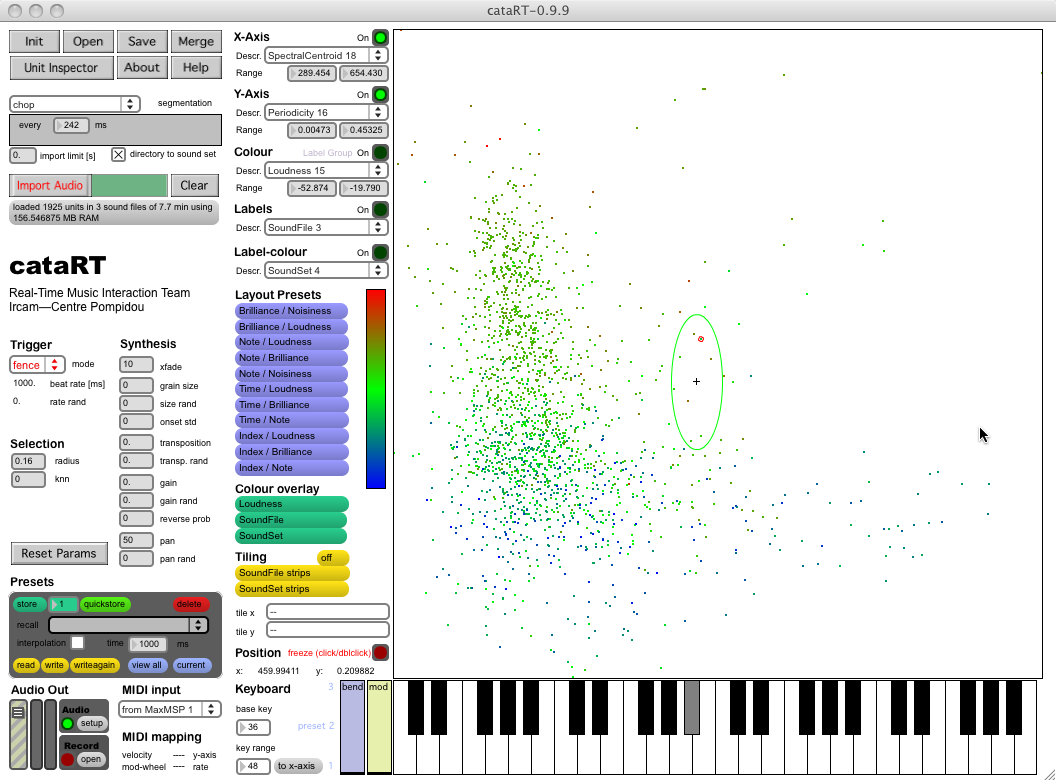 The real-time corpus-based concatenative sound synthesis system CataRT plays grains from a large corpus of segmented and descriptor-analysed sounds according to proximity to a target position in the descriptor space. This can be seen as a content-based extension to granular synthesis providing direct access to specific sound characteristics.
CataRT is implemented in MaxMSP and takes full advantage of the generalised data structures and arbitrary-rate sound processing facilities of the FTM and Gabor libraries. Segmentation and sound descriptors are loaded from text or SDIF files, or analysed on-the-fly.
CataRT allows to explore the corpus interactively or via a target sequencer, to resynthesise an audio file or live input with the source sounds, or to experiment with expressive speech synthesis and gestural control.
CataRT is available from the IRCAM Real-Time Musical Interactions Team’s web site.